
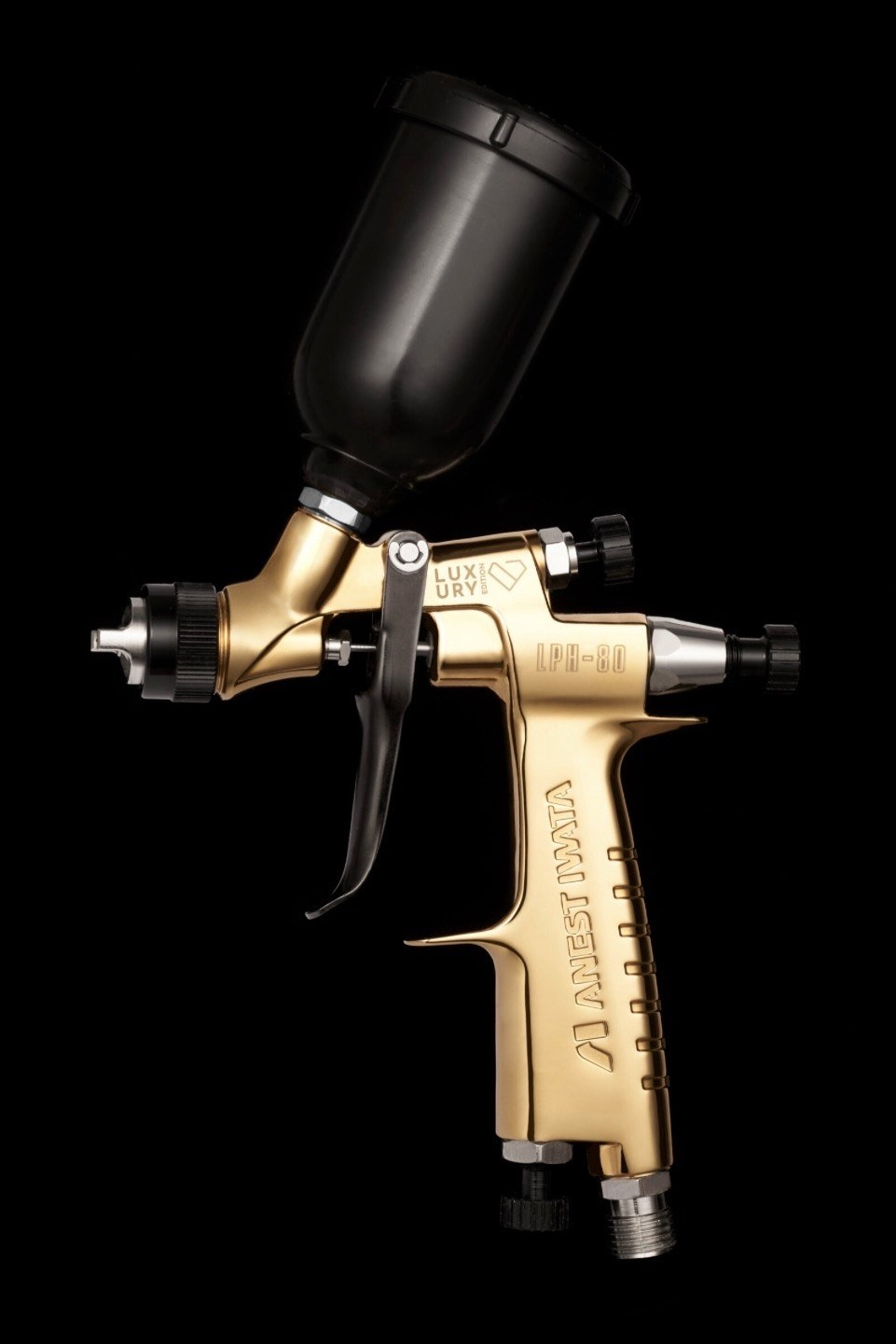
LPH‑80
Luxury Edition
ANEST IWATA · Gold Edition · 2024
A spray gun that redefines what local repair can look like. The gold coating is not just aesthetics — it's a statement of belonging to a different tier of professional craftsmanship.
Small in size.
Flawless in result.
The ANEST IWATA LPH-80 Luxury Edition is the benchmark in spot repair tooling. Its compact body houses technology previously reserved for full-size professional guns. The gold coating is not marketing — it's a visual confirmation of the instrument's calibre.
For mobile detailing and local body repair specialists, the LPH-80 has become the industry standard. It works where a full-size gun simply cannot fit — wheel arches, sills, bumpers, panel joints. And it delivers results indistinguishable from factory finish.
The perfect tool disappears in your hands.
You think only about the work.
Numbers that perform
At just 60 NL/min, the gun runs on any compact compressor. For mobile repair work — this is the spec that changes everything.
What the LPH-80
is built for
Stone Chip Repair
Precise spot application of base and clear without touching adjacent panels
Blending
Smooth basecoat transition for partial panel respray
Bumpers & Sills
Primer, base and clear on plastic components and trim
Wheels & Arches
Coating hard-to-reach areas without disassembly
UV Primer
Officially recommended by ANEST IWATA for UV-cure materials
Ceramic Coatings
Application of liquid ceramic and protective surface coatings
Choosing the right nozzle
changes everything
Nozzle size directly impacts your result. The LPH-80 accepts interchangeable needle and nozzle sets — choosing the right diameter for the material you're spraying is not optional, it's the foundation of clean work.
Ultra-fine atomisation. Ideal for tight spot repairs and feather-edge blending where precision matters more than coverage speed. Minimal overspray, maximum control.
The go-to size for basecoat and colour blending. Fine enough for precision, open enough for smooth transitions across panels. Most mobile detailers reach for this first.
The all-rounder. Handles base, primer and medium-viscosity clears with equal confidence. If you're building a one-nozzle setup for on-site work, this is the size to start with.
Best suited for clearcoat and high-solid materials. Higher fluid delivery gives wetter passes and better flow-out — the result is a deep, glass-like gloss straight from the gun.
Pro tip: Keep two nozzle sets ready — 0.8 mm for base and blending, 1.2 mm for clearcoat. Switching takes under two minutes and makes a measurable difference in finish quality.
Pro hacks that
actually work
-
01
Set Pressure by Material, Not by Default
Run 0.8–0.9 bar for basecoat, 0.9–1.0 bar for clearcoat. Don't copy the 1.5 bar you'd use on a full-size gun — the LPH-80 atomises better at low pressure. Fit an inline gauge directly at the gun inlet.
-
02
Viscosity Is the Key to a Perfect Fan
Target viscosity for clearcoat is 16–18 seconds by DIN 4 cup. Too thick produces orange peel; too thin causes runs and sags. Always check with a viscosity cup — never trust eyeballing it.
-
03
Distance: 15–20 cm for Spot, 20–25 cm for Blending
For chip repair, hold at 15 cm — concentrated spot without losing atomisation. For blending, step back to 25 cm for a soft, gradual edge. Distance is one of the most underrated variables in spot repair.
-
04
Clean After Every Material — No Exceptions
Dried basecoat or clear residue in the fluid passage destroys atomisation. Flush with solvent immediately after each use. Every two weeks, strip the needle and clean properly — ultrasonic bath or manual with a soft cloth.
-
05
The 70 ml Cup Is a Feature, Not a Limitation
A small cup means you mix exactly what you need — no leftover material, no compromised batches. Freshly mixed material always performs better. A 250 ml cup is included for larger repair zones.
-
06
Manage Material and Air Temperature
Cold paint (below 18°C) produces poor atomisation even from the LPH-80. Warm your mixed material cup in warm water to 22–24°C — the fan pattern becomes visibly more even. Critical for mobile repair in winter.
-
07
Blending Zone — Wide Fan + Fast Movement
Open the fan to full (5.5") and increase your pass speed. Slow movement with a wide fan causes runs. Make 3–4 quick, light passes instead of one heavy coat. Each pass builds the transition without overloading the surface.
-
08
Always Test on Cardboard First
Before touching the car, make 2–3 passes on scrap cardboard. Ten seconds that reveal pressure, viscosity, and fan pattern immediately. No professional skips this step — ever.
Mobile repair:
maximum output, zero compromise
Running from a Compact Compressor
At just 60 NL/min, the LPH-80 runs comfortably from a 1.5–2 HP compressor straight from the boot of a car. For mobile work, pair it with a 6-litre tank minimum — the compressor cycles less, pressure stays stable, and your fan pattern remains consistent throughout the repair.
Wet-on-Wet Clear Technique
Use the 2+1 protocol: two full coats of clear with a 5–7 minute flash-off between them, then one final coat thinned by an extra 5–10%. The LPH-80 handles this sequence exceptionally well — the final coat lays mirror-flat, often requiring minimal or no polishing to achieve a perfect gloss.
Mask to the Gun's Fan Size
Mask your repair zone to match the actual fan width — a maximum of roughly 14 cm at full fan opening. This keeps repair zones minimal and dramatically speeds up work. Masking liquid around the perimeter gives a clean, razor-sharp edge every time.
Needle and Nozzle Maintenance — Once per Quarter
Every three months, inspect the needle for bends and tip damage. Even microscopic damage causes an asymmetric fan — a problem that gets blamed on paint or pressure for months. A genuine LPH-80 needle is affordable and replacing it often solves issues that seemed impossible to diagnose.
Important: Never use aggressive nitro-based solvents to flush the LPH-80 Luxury Edition. Direct contact can damage the gold coating. Use standard acrylic reducer or a dedicated gun cleaner solution only.
Why the LPH-80 Luxury Edition
is the right choice
In the niche world of spot repair tools, very few names carry real weight. The ANEST IWATA LPH-80 is one of two or three that every professional names without hesitation. The Luxury Edition adds exclusivity to an already unimpeachable reputation — for those who understand that the tools you choose reflect the standards you hold yourself to.
For mobile detailing, on-site body repair, stone chip work and SMART repair — this is the finest balance of size, output, and precision on the market. A gun you can be proud to pull out anywhere.
A professional is visible not only in their hands — but in their tools.
LPH‑80
Luxury Edition
ANEST IWATA · Золотое Издание · 2024
Пистолет, который переосмысляет само понятие локального ремонта. Золотое покрытие — не просто эстетика. Это заявление о принадлежности к другому уровню профессионального мастерства.
Маленький по размеру.
Безупречный по результату.
ANEST IWATA LPH-80 Luxury Edition — эталон в сегменте инструментов для точечного ремонта. Компактный корпус скрывает технологии, которые раньше были доступны только в профессиональных пистолетах полного размера. Золотое покрытие — не маркетинг, а визуальное подтверждение статуса инструмента.
Для мастеров мобильного детейлинга и локального кузовного ремонта LPH-80 стал стандартом индустрии. Он работает там, где большой пистолет физически не помещается — в арках, порогах, на бамперах, в стыках панелей. С результатом, неотличимым от заводского.
Идеальный инструмент — тот, который исчезает в руках.
Ты думаешь только о работе.
Параметры, которые работают
Расход воздуха всего 60 Нл/мин — пистолет работает от любого компактного компрессора. Для выездного детейлинга это критичный параметр.
Для каких задач
создан LPH-80
Ремонт сколов
Точечное нанесение базы и лака без захвата соседних панелей
Растушёвка
Плавный переход базового слоя при частичной окраске
Бамперы
Грунт, база, лак на пластиковых элементах и порогах
Диски и арки
Покрытие труднодоступных зон без демонтажа
UV-грунт
Официально рекомендован производителем для UV-материалов
Керамика
Нанесение жидкой керамики и защитных покрытий
Правильная дюза —
половина результата
Диаметр сопла напрямую влияет на качество атомизации, подачу материала и финальный результат. LPH-80 поддерживает сменные комплекты иглы и сопла — подбор под конкретный материал это не опция, а основа чистой работы.
Сверхтонкая атомизация. Идеальна для точечных ремонтов и растушёвки там, где нужна максимальная точность. Минимальный перебег, полный контроль.
Основная дюза для базы и цветовых переходов. Точность и плавность одновременно. Большинство мастеров берут именно её первой.
Универсальный вариант. База, грунт и лаки средней вязкости — одинаково уверенно. Если строишь выездной комплект с одной дюзой — начинай с этой.
Лучший выбор для лака. Повышенная подача даёт влажные проходы и лучший розлив — результат: зеркальный глянец прямо с пистолета.
Совет мастера: держи два комплекта — 0.8 мм для базы и растушёвки, 1.2 мм для лака. Смена занимает меньше двух минут и даёт ощутимую разницу в качестве покрытия.
Лайфхаки мастеров,
которые работают
-
01
Давление по материалу, не по умолчанию
Для базы 0.8–0.9 бар, для лака 0.9–1.0 бар. Не выставляй «стандартные» 1.5 бар — LPH-80 атомизирует при низком давлении лучше. Поставь манометр прямо на вход пистолета.
-
02
Вязкость — ключ к идеальному факелу
Оптимальная вязкость лака — 16–18 секунд по DIN 4. Густой материал даёт «апельсиновую корку», жидкий — подтёки. Всегда проверяй вискозиметром.
-
03
Расстояние: 15–20 см для точки, 20–25 для растушёвки
При ремонте сколов держи пистолет на 15 см — концентрированное пятно без потери атомизации. При растушёвке отходи до 25 см для мягкого края перехода.
-
04
Чистка после каждого материала — правило, не опция
Остатки базы или лака в канале уничтожают атомизацию. Промывай сразу после работы. Раз в 2 недели разбирай иглу и чисти ультразвуком или вручную.
-
05
70 мл бачка — это достоинство, а не недостаток
Замешиваешь ровно столько, сколько нужно. Никаких остатков. Свежесмешанный материал — лучший материал. В комплекте идёт 250 мл бачок для объёмных задач.
-
06
Температура материала и воздуха
Краска ниже +18°C даёт плохую атомизацию даже у LPH-80. Прогрей бачок в тёплой воде до +22–24°C — факел станет заметно ровнее. Критично при выездных работах зимой.
-
07
Блендинг — широкий факел плюс скорость
При растушёвке открывай факел на максимум (5.5") и увеличивай скорость прохода. Медленный проход широким факелом даёт потёки. 3–4 быстрых лёгких прохода вместо одного тяжёлого.
-
08
Всегда тестируй на картоне
Перед работой на авто — 2–3 прохода по картону. 10 секунд, но сразу видно давление, вязкость и паттерн факела. Профессионалы не пропускают этот шаг никогда.
Мобильный ремонт:
максимум без компромиссов
Работа от мини-компрессора
LPH-80 потребляет всего 60 Нл/мин — работает от компрессоров 1.5–2 л.с. прямо из багажника. При выездном ремонте используй ресивер от 6 литров: давление будет стабильным, факел — ровным на протяжении всей работы.
Техника «мокрый по мокрому»
Протокол 2+1: два полных слоя лака с выдержкой 5–7 минут, затем финишный с разбавлением +5–10%. LPH-80 отлично работает с таким протоколом — финишный слой ложится зеркально без дополнительной полировки.
Маскировка под размер факела
Маскируй зону под фактический размер факела LPH-80 — максимум 14 см в ширину при полном открытии. Минимальные ремонтные зоны, быстрая работа. Маскировочная жидкость по периметру даёт идеальный край.
Игла и сопло: обслуживание раз в квартал
Проверяй иглу на изгиб и повреждения. Даже микро-повреждение кончика создаёт асимметричный факел. Оригинальная игла стоит недорого — её замена часто решает проблемы, которые мастера месяцами списывают на материал или компрессор.
Важно: не используй агрессивные нитро-растворители для промывки LPH-80 Luxury Edition. Золотое покрытие может пострадать. Используй акриловый разбавитель или специальный пистолет-клинер.
Почему LPH-80 Luxury Edition —
это правильный выбор
В нише локального ремонта не так много имён. ANEST IWATA LPH-80 — одно из двух-трёх, которые называют все профессионалы без исключения. Luxury Edition добавляет к безупречной репутации инструмента эксклюзивность — для тех, кто понимает, что инструмент отражает отношение к своему делу.
Для мобильного детейлинга, выездного кузовного ремонта, ремонта сколов и SMART-ремонта — это лучшее соотношение размера, производительности и точности на рынке.
Профессионал виден не только по рукам. Виден по инструменту.

ANEST IWATA — история бренда: 100 лет качества Master Detailing

Будущее автопрома 2026: AI, Tesla, Volkswagen и что это значит для автосервиса | Shiller.pro

Защита лобового стекла прозрачной плёнкой — бронирование от сколов и трещин в Кишинёве
PDR & Detailing Praha — Опытный мастер ищет работу в Праге | 10+ лет опыта


Mercedes-Benz — Не Просто Авто. Это Любовь, Свобода и Воспоминания на Колёсах

Китайцы захватывают Молдову: Mercedes-центр закрылся, а что будет с ценами в 2026?

Купить авто в Молдове в 2026 году — рынок, цены, проверка перед покупкой

Снятие клипс для PDR и детейлинга: как разобрать авто правильно

Защита лобового стекла от сколов — Кишинёв

Грэпплинг-перчатки RDX Shooter Aura Plus T-17 — обзор, защита и комфорт для ММА и Бокса

Вся правда о креатине Кишинев

Защитная плёнка для фар, защита фар PPF,

Детейлинг в Кишинёве
