
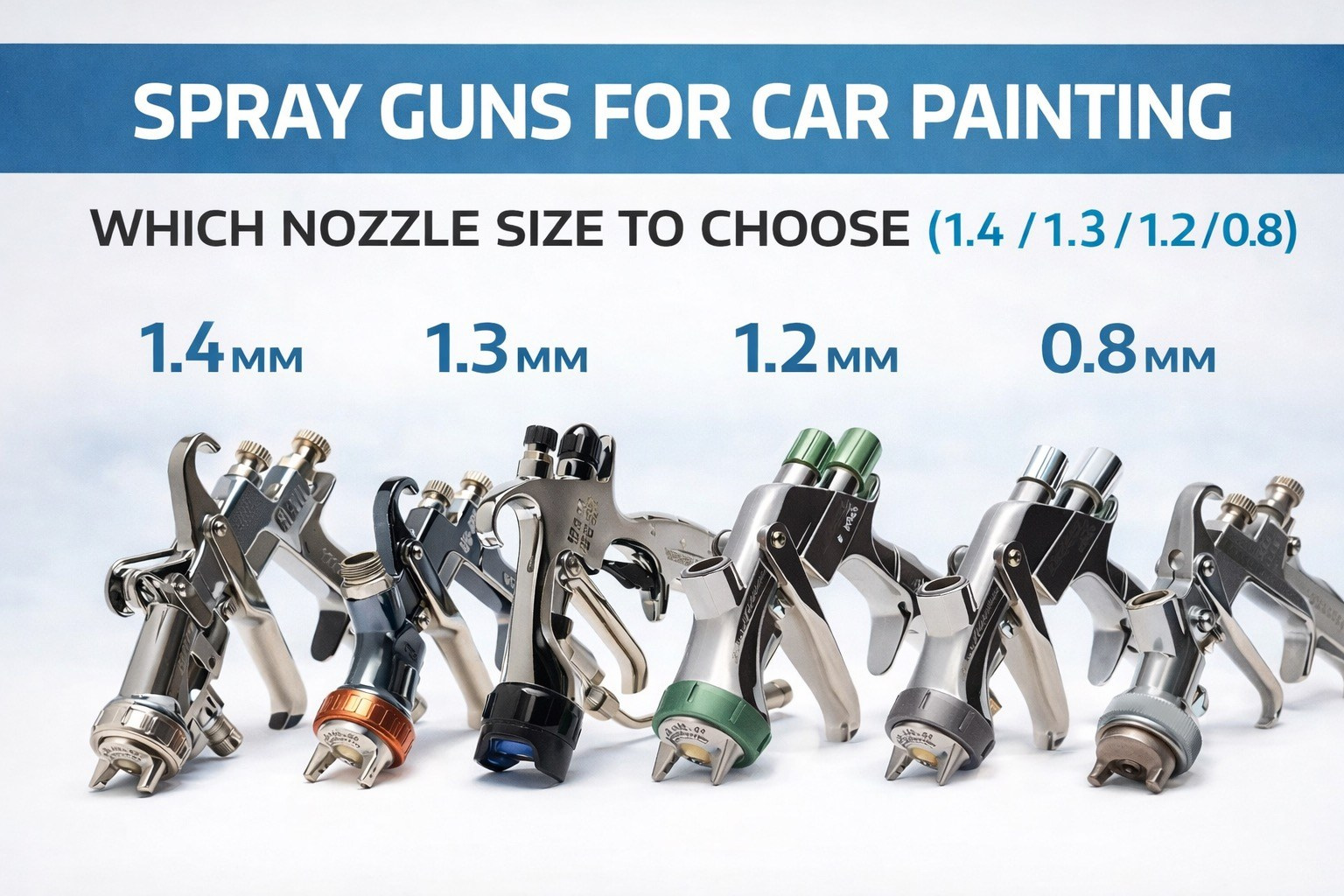
My working
spray gun set
Shiller.pro · Pro Guide · 2024
1.4 / 1.3 / 1.2 / 0.8 — how I use each nozzle size in real work and what actually delivers results. Practice only, no theory.
Four sizes.
Every job covered.
This isn't a list of "best spray guns according to the internet." This is what sits on my shelf and works every single day — for primer, base, blending, and spot repair.
- Primer, especially 2K
- Acrylic paints
- When you need to flood the surface
Good balance between coverage and control. Doesn't over-deliver, but doesn't starve the material either.
- Basecoat — metallic, pearl
- Clearcoat — finish layer
Even fan pattern, proper texture. With the right setup you get clean gloss without extra effort.
- Transitions and blending
- Local spot repairs
- Pearl, tri-stage colours
Soft, controlled spray without runs. When precision is what matters — 1.2 is the one I reach for.
- Small details
- Spot touch-ups
- Fine zone corrections
Maximum control, minimal material use. Irreplaceable where accuracy matters more than speed.
How I combine
sizes in practice
Each gun does its job at its own stage. That's how the result comes out cleaner — no rework, no defects.
Primer
Flood the surface, build the foundation
Basecoat
Metallic or pearl — even fan, clean lay
Blending
Soft fade-out without runs or spots
Spot correction
Precise final touch-up where needed
Clearcoat
Finish gloss — back to 1.3
The right tool at the right stage isn't perfectionism — it's defect prevention. One wrong nozzle size can ruin an entire layer.
What actually
moves the needle
-
Never mix base and clear in the same gun
Even with the same nozzle size — keep separate guns for base and clear. Mixing them ruins the fan pattern, introduces defects, and makes a clean result significantly harder to achieve.
-
1.2 is the ideal blending size
Blending with a 1.3 makes it easy to over-apply. The 1.2 gives you a softer fade, more control, and far less risk of spots or halos. A small difference in size — a visible difference in result.
-
Dial in air first — not material
A common mistake: reaching for the fluid knob first. The right setup order is pressure → fan → fluid. Work it in that sequence and your results will be consistent from the very first pass.
-
0.8 saves you money
On small jobs — less material, less time, cleaner result. A small gun pays for itself fast, especially on spot work and expensive materials where waste adds up quickly.
-
Cleaning is not optional — it's a condition
A dirty gun means bad paint. Minimum standard: flush after every material, clean fluid passages, separate cups for different products. Five minutes now — zero defects later.
My set —
any job, handled
Four sizes is enough to cover virtually any paint job and deliver a clean result — first time, every time.
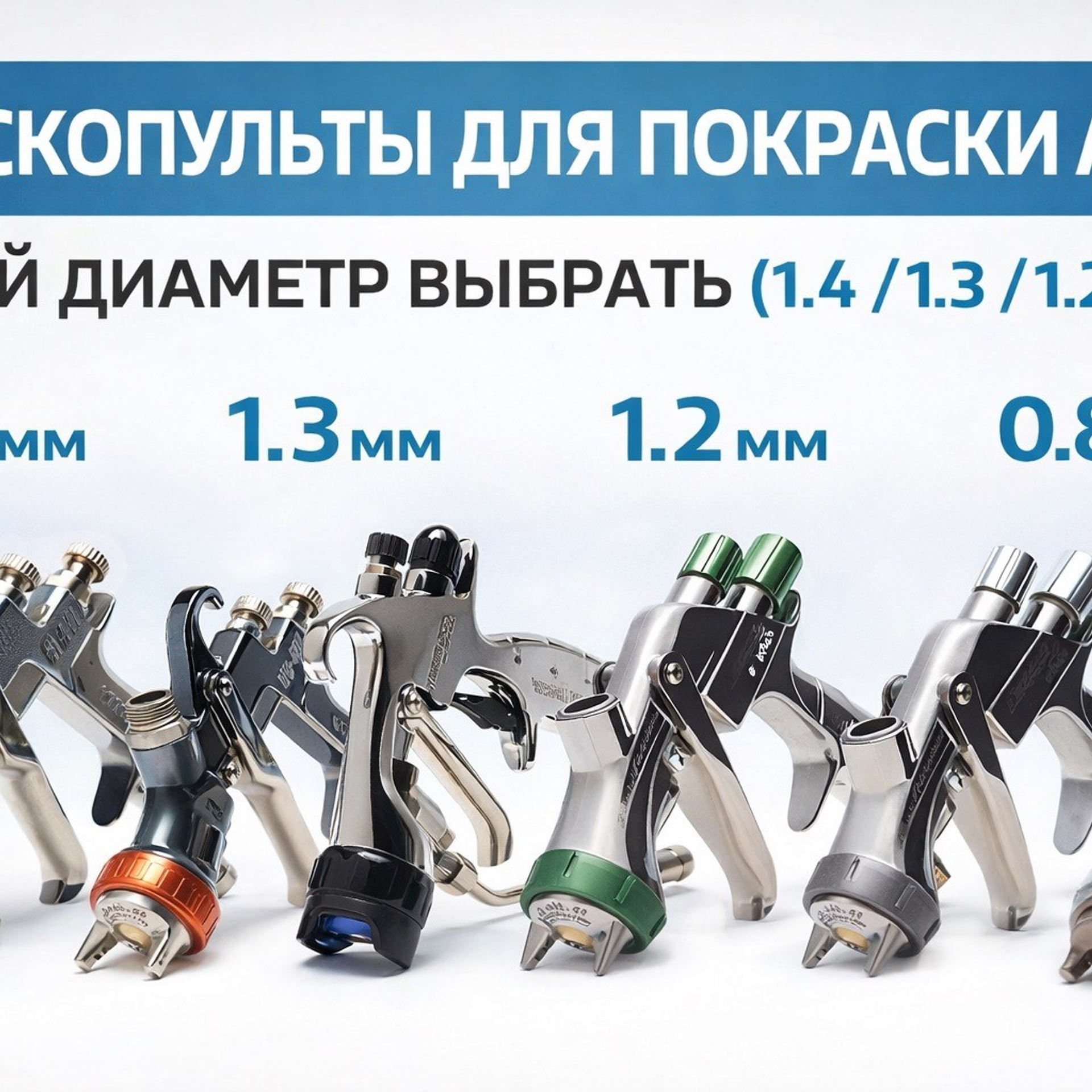
Краскопульты для покраски авто: какой диаметр выбрать (1.4 / 1.3 / 1.2 / 0.8)
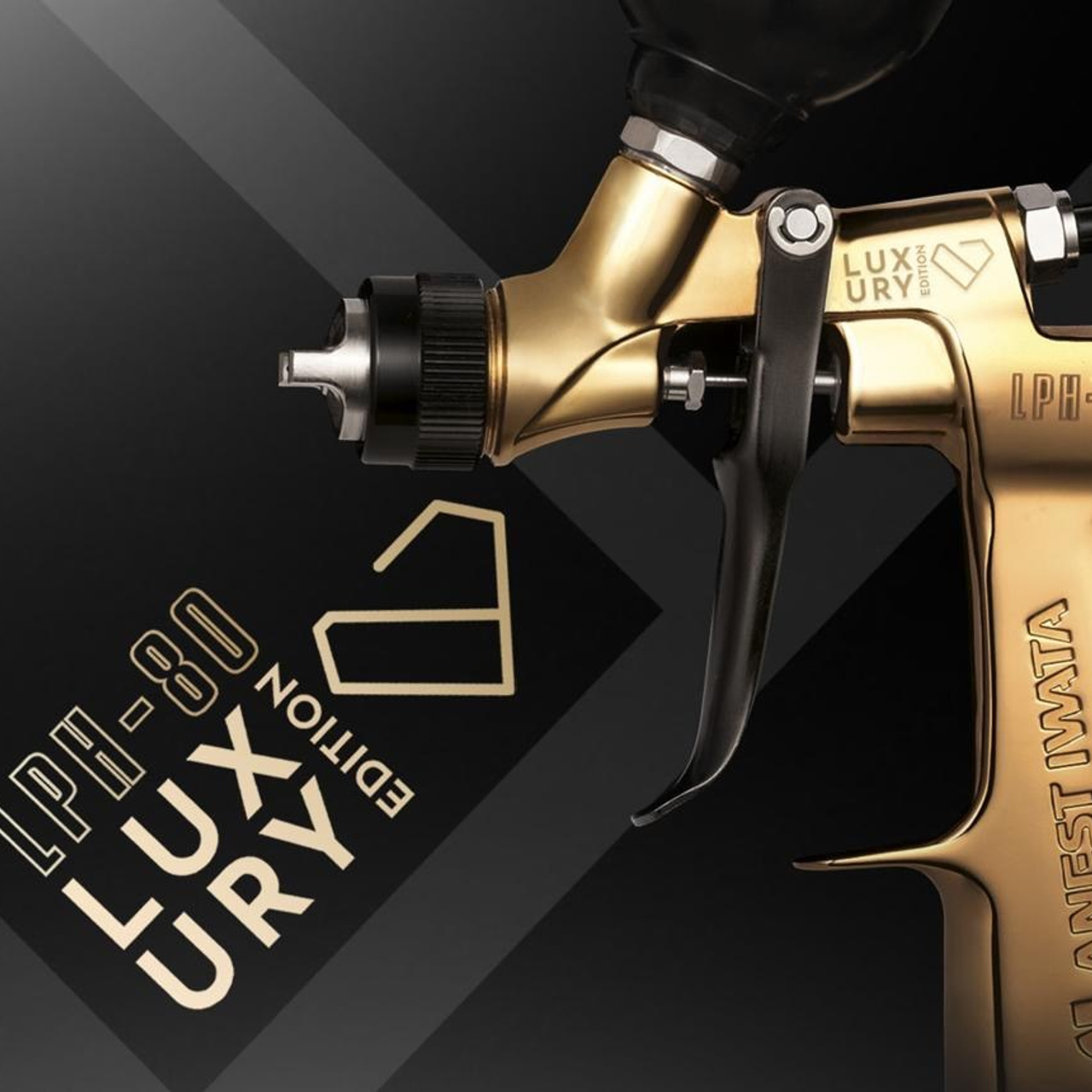
LPH‑80 Luxury Edition ANEST IWATA

ANEST IWATA — история бренда: 100 лет качества Master Detailing

Будущее автопрома 2026: AI, Tesla, Volkswagen и что это значит для автосервиса | Shiller.pro

Защита лобового стекла прозрачной плёнкой — бронирование от сколов и трещин в Кишинёве

PDR & Detailing Praha — Опытный мастер ищет работу в Праге | 10+ лет опыта


Mercedes-Benz — Не Просто Авто. Это Любовь, Свобода и Воспоминания на Колёсах

Китайцы захватывают Молдову: Mercedes-центр закрылся, а что будет с ценами в 2026?

Купить авто в Молдове в 2026 году — рынок, цены, проверка перед покупкой

Снятие клипс для PDR и детейлинга: как разобрать авто правильно

Защита лобового стекла от сколов — Кишинёв

Грэпплинг-перчатки RDX Shooter Aura Plus T-17 — обзор, защита и комфорт для ММА и Бокса

Вся правда о креатине Кишинев
